
Craniosacral Therapy – 45 Minute Session | Gentle Nervous System Support
A gentle 45-minute craniosacral therapy session that supports nervous system regulation, relaxation, and natural body balance through subtle hands-on work.
Nelle – Registered Witch
3/13/20262 min read
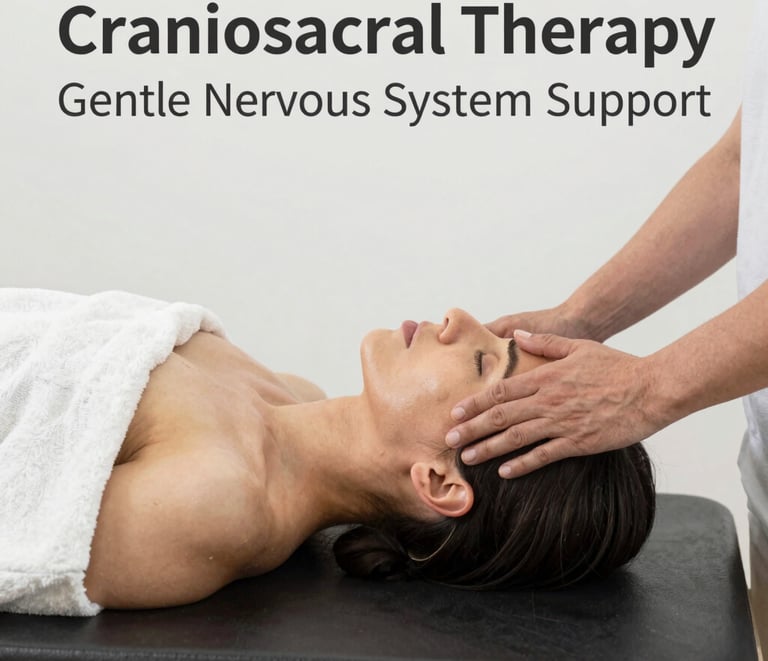
There are moments when the body doesn’t need to be pushed, stretched, or corrected. It simply needs to be listened to.
Craniosacral therapy is often described as a gentle, hands-on practice that supports the nervous system. But describing it that way doesn’t fully capture the experience. A 45-minute craniosacral therapy session is less about doing something to the body and more about creating the conditions where the body can begin to reorganize itself.
Many people arrive expecting pressure or manipulation. Instead, they encounter stillness.
The practitioner works with subtle contact around the head, spine, and sacrum, following small movements in the body’s natural rhythm. These rhythms are sometimes called the craniosacral rhythm — a quiet pulsing connected to the movement of cerebrospinal fluid and the nervous system.
But what matters most is not the technique. It is the quality of attention.
“The body often knows how to unwind long before the mind understands why.”
When the nervous system senses safety, tension patterns begin to soften. Muscles that have been quietly bracing for years may release without effort. Breath deepens. Awareness returns to places that have been holding pressure or fatigue.
In a 45-minute session, changes are usually subtle rather than dramatic. A person may notice warmth spreading through the body, a gentle emotional release, or simply a sense of spaciousness in places that previously felt tight.
This kind of work respects the body’s timing.
It does not force catharsis. It does not push the system to process more than it can safely integrate. Instead, it invites the body to remember its own rhythm.
“Healing sometimes begins the moment the body realizes it is no longer being rushed.”
For people who live with chronic stress, sensitivity, or nervous system overload, this pace can feel surprisingly relieving. The body is not asked to perform or explain itself. It is allowed to settle.
Many leave a craniosacral session describing a quiet shift — clearer thinking, softer breathing, or a sense of being more present inside themselves.
These shifts may seem small, but they often mark an important change. The nervous system has moved from protection toward regulation.
And once the body remembers that state, it becomes easier to return to it again.
Craniosacral therapy does not impose change.
It creates a space where the body can rediscover balance in its own way, at its own pace.
Sometimes, forty-five minutes of gentle listening is all it takes for the system to begin that process.